

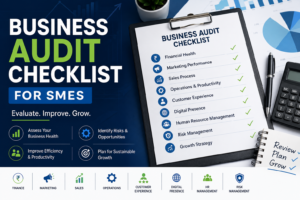
Running a business isn’t just about increasing sales—it’s about ensuring every part of your business is working efficiently. Many small and medium-sized enterprises (SMEs) focus on daily operations but overlook periodic business audits. A business audit isn’t only for large corporations; it’s a powerful tool that helps SMEs identify risks, improve profitability, and prepare for sustainable growth. If you own or manage an SME, use this Business Audit Checklist for SMEs to evaluate the health of your business.
What is a Business Audit?
A business audit is a systematic review of your company’s operations, finances, compliance, marketing, and overall performance. Its purpose is to identify strengths, weaknesses, opportunities, and potential risks before they become costly problems.
Think of it as a comprehensive health check-up for your business.
1. Business Registration & Legal Compliance
Legal compliance forms the foundation of every successful business. Many SMEs concentrate on acquiring customers and increasing sales but often overlook regulatory requirements. Missing statutory filings, expired licenses, or unregistered intellectual property can result in financial penalties, legal disputes, and loss of credibility. A business audit should begin by verifying that all registrations and compliance obligations are current.
During your audit, confirm that your business registration documents, GST registration, PAN, TAN, professional tax registration, and other statutory licenses are valid. Companies and LLPs should also verify that annual ROC filings, board resolutions, and statutory registers are maintained correctly. If your business has developed a unique brand identity, ensure your trademark is registered to protect it from unauthorized use.
A legally compliant business not only avoids penalties but also gains the confidence of customers, investors, financial institutions, and potential business partners.
Checklist
- Business registration is valid.
- GST registration is active (if applicable).
- ROC annual filings are completed.
- Business licenses and permits are renewed.
- Trademark registration is secured.
- Contracts with employees, vendors, and clients are documented2. Financial Health Check
2. Financial Health Check
Why Financial Management Matters
Financial management is one of the most important factors that determines the long-term success of a business. While increasing sales is essential, sustainable growth depends on how effectively the business manages its income, expenses, and available resources. A financially stable business can invest in expansion, manage unexpected challenges, and maintain smooth day-to-day operations. Regular financial reviews also improve transparency, build investor confidence, and help business owners make informed strategic decisions. Without a strong financial foundation, even businesses with high sales can struggle to survive.
Key Financial Indicators to Review
A financial health check should focus on the key metrics that reflect the overall performance of the business. Business owners should regularly review cash flow to ensure sufficient funds are available for operational needs. Profit margins should be analysed to measure profitability, while accounts receivable and payable should be monitored to maintain healthy cash movement. Working capital, operating expenses, and outstanding debts should also be evaluated periodically. Reviewing these financial indicators helps identify areas for improvement and supports better financial planning.
Financial Health Checklist
✔ Review monthly revenue and sales performance.
✔ Monitor gross and net profit margins.
✔ Analyse monthly cash flow statements.
✔ Review accounts receivable and overdue payments.
✔ Monitor accounts payable and supplier obligations.
✔ Evaluate working capital requirements.
✔ Review operating expenses and identify unnecessary costs.
✔ Assess outstanding loans and repayment schedules.
✔ Compare financial performance with budgets and forecasts.
✔ Ensure statutory taxes and financial compliances are completed on time.
3. Marketing Performance
Marketing Should Deliver Measurable Results
Marketing is much more than creating brand awareness or increasing social media followers. Its primary objective is to generate qualified leads, attract potential customers, and contribute directly to business growth. Every marketing activity should have a clear purpose and measurable outcome, whether it is increasing website inquiries, improving product sales, or strengthening customer relationships. Businesses that regularly evaluate their marketing performance can identify successful strategies, eliminate ineffective campaigns, and maximize the value of their marketing investments.
Marketing Performance Checklist
✔ Review monthly website traffic and visitor trends.
✔ Track the number of qualified leads generated.
✔ Calculate Customer Acquisition Cost (CAC).
✔ Monitor conversion rates across marketing channels.
✔ Review SEO rankings and organic website traffic.
✔ Analyse social media engagement and audience growth.
✔ Measure email marketing open and click-through rates.
✔ Evaluate advertising campaign performance and ROI.
✔ Compare marketing expenses with revenue generated.
✔ Update marketing strategies based on performance data.
4. Sales Process
Build a Structured Sales Process
A well-defined sales process helps businesses convert prospects into customers in a consistent and efficient manner. Instead of relying on individual sales skills or chance opportunities, a structured process ensures that every lead is handled systematically from the initial inquiry to the final purchase. Clear sales stages improve communication, reduce delays, and increase the likelihood of closing deals. Businesses with an organized sales process are also better equipped to provide a consistent customer experience and build long-term relationships.
Sales Process Checklist
✔ Document a standardized sales process.
✔ Implement a Customer Relationship Management (CRM) system.
✔ Track all customer inquiries and leads.
✔ Maintain regular follow-up with prospective customers.
✔ Monitor sales pipeline performance.
✔ Measure lead-to-customer conversion rates.
✔ Review average sales cycle duration.
✔ Analyse customer retention and repeat purchase rates.
✔ Set monthly and quarterly sales targets.
✔ Review sales performance reports regularly.
5. Operations & Productivity
Improve Operational Efficiency
Operational efficiency is a key driver of business profitability and customer satisfaction. Businesses with streamlined operations can deliver products and services faster, reduce unnecessary expenses, and improve overall productivity. Efficient operations minimize delays, reduce waste, and ensure that resources are utilized effectively. Regular operational reviews help businesses identify process gaps, eliminate inefficiencies, and create a strong foundation for sustainable growth.
Operations & Productivity Checklist
✔ Develop and maintain Standard Operating Procedures (SOPs).
✔ Review workflow efficiency and eliminate bottlenecks.
✔ Implement automation for repetitive business tasks.
✔ Monitor inventory levels and stock movement.
✔ Evaluate supplier and vendor performance.
✔ Maintain quality control procedures.
✔ Measure employee productivity and performance.
✔ Provide regular employee training and skill development.
✔ Review operational costs and identify savings opportunities.
✔ Conduct periodic operational performance audits.
6. Customer Experience
Focus on Customer Retention
Acquiring new customers requires significant investment in marketing and sales, while retaining existing customers is generally more cost-effective and profitable. Loyal customers are more likely to make repeat purchases, recommend your business to others, and contribute to a steady revenue stream. Building long-term relationships through excellent service strengthens customer trust and increases brand loyalty. Businesses that prioritize customer retention often experience higher profitability and sustainable growth compared to those focusing only on acquiring new customers.
Customer Experience Checklist
✔ Measure customer satisfaction regularly.
✔ Collect and analyse customer feedback.
✔ Respond to complaints promptly and professionally.
✔ Track customer retention and repeat purchase rates.
✔ Monitor customer referral rates.
✔ Review online ratings and testimonials.
✔ Maintain high product and service quality.
✔ Personalize customer communication where possible.
✔ Conduct customer satisfaction surveys.
✔ Implement improvements based on customer feedback.
7. Digital Presence
Build a Strong Online Presence
In today’s digital economy, customers often research a business online before making a purchase or contacting a company. A professional online presence creates a positive first impression and helps establish trust with potential customers. Businesses without an updated website or online information risk losing valuable opportunities to competitors. A strong digital presence increases visibility, improves accessibility, and enables customers to learn about products and services at their convenience.
Digital Presence Checklist
✔ Maintain a professional and mobile-friendly website.
✔ Update your Google Business Profile regularly.
✔ Monitor website traffic and visitor behaviour.
✔ Improve search engine rankings through SEO.
✔ Publish valuable and relevant website content.
✔ Maintain active social media profiles.
✔ Monitor and respond to online reviews.
✔ Ensure consistent branding across digital platforms.
✔ Review website loading speed and user experience.
✔ Track digital marketing performance regularly.
8. Human Resource Management
Invest in Your People
Employees are one of the most valuable assets of any organization. Their knowledge, skills, and commitment directly influence productivity, innovation, and customer satisfaction. Recruiting the right talent and creating a supportive work environment helps businesses achieve their strategic objectives. Organizations that invest in employee development are better equipped to adapt to changing market conditions and maintain a competitive advantage.
Human Resource Management Checklist
✔ Recruit qualified and skilled employees.
✔ Clearly define job roles and responsibilities.
✔ Conduct employee induction and training programs.
✔ Implement regular performance evaluations.
✔ Maintain payroll and statutory compliance.
✔ Monitor employee attendance and productivity.
✔ Encourage employee feedback and communication.
✔ Recognize and reward employee achievements.
✔ Provide career development opportunities.
✔ Review employee retention and engagement levels.
9. Risk Management
Identify Business Risks
Every business faces risks that can affect its operations, financial performance, reputation, and long-term sustainability. These risks may arise from operational failures, financial instability, legal non-compliance, cyber threats, or unexpected market changes. Identifying potential risks early enables businesses to develop appropriate strategies to minimize their impact. A proactive approach to risk management helps organizations remain resilient during periods of uncertainty.
Risk Management Checklist
✔ Identify operational, financial, legal, and cybersecurity risks.
✔ Maintain adequate business insurance coverage.
✔ Implement strong data security and backup systems.
✔ Establish internal controls to prevent fraud.
✔ Ensure compliance with applicable laws and regulations.
✔ Conduct periodic risk assessments.
✔ Develop a business continuity and disaster recovery plan.
✔ Review vendor and supplier risks.
✔ Train employees on risk awareness and cybersecurity.
✔ Update risk management policies regularly.
A business audit is more than just a checklist it’s a strategic tool that helps business owners understand where they stand today and what improvements are needed to achieve future growth. By regularly evaluating key areas such as financial health, marketing performance, sales processes, operations, customer experience, digital presence, human resource management, and risk management, businesses can identify strengths, address weaknesses, and make informed decisions that drive long-term success. A proactive approach to business auditing not only improves operational efficiency and profitability but also prepares organizations to adapt to changing market conditions and seize new opportunities.
Whether you are a startup, a growing SME, or an established enterprise, conducting a comprehensive business audit at least once or twice a year can provide valuable insights for continuous improvement. Businesses that monitor their performance regularly are better positioned to minimize risks, optimize resources, enhance customer satisfaction, and maintain a competitive advantage. Remember, successful businesses are not built by chance they are built through careful planning, regular evaluation, and a commitment to continuous improvement.
Conclusion
A successful business is not measured solely by its revenue but by how effectively it manages its operations, finances, customers, people, and risks. A comprehensive business audit enables organizations to evaluate every critical function, identify opportunities for improvement, and develop strategies for sustainable growth. By using this Business Audit Checklist as a practical guide, business owners can strengthen their operational foundation, improve decision-making, and build a resilient organization capable of thriving in an increasingly competitive business environment.
Don’t wait until challenges become crises. Conduct a business audit, identify areas for improvement, and implement corrective measures before they impact your growth. Regular business reviews are one of the smartest investments you can make to ensure your organization remains compliant, profitable, and future-ready.